“What are you looking for?”
“I can’t tell you until I find it.”
The Woman in the Window, film noir, 1944
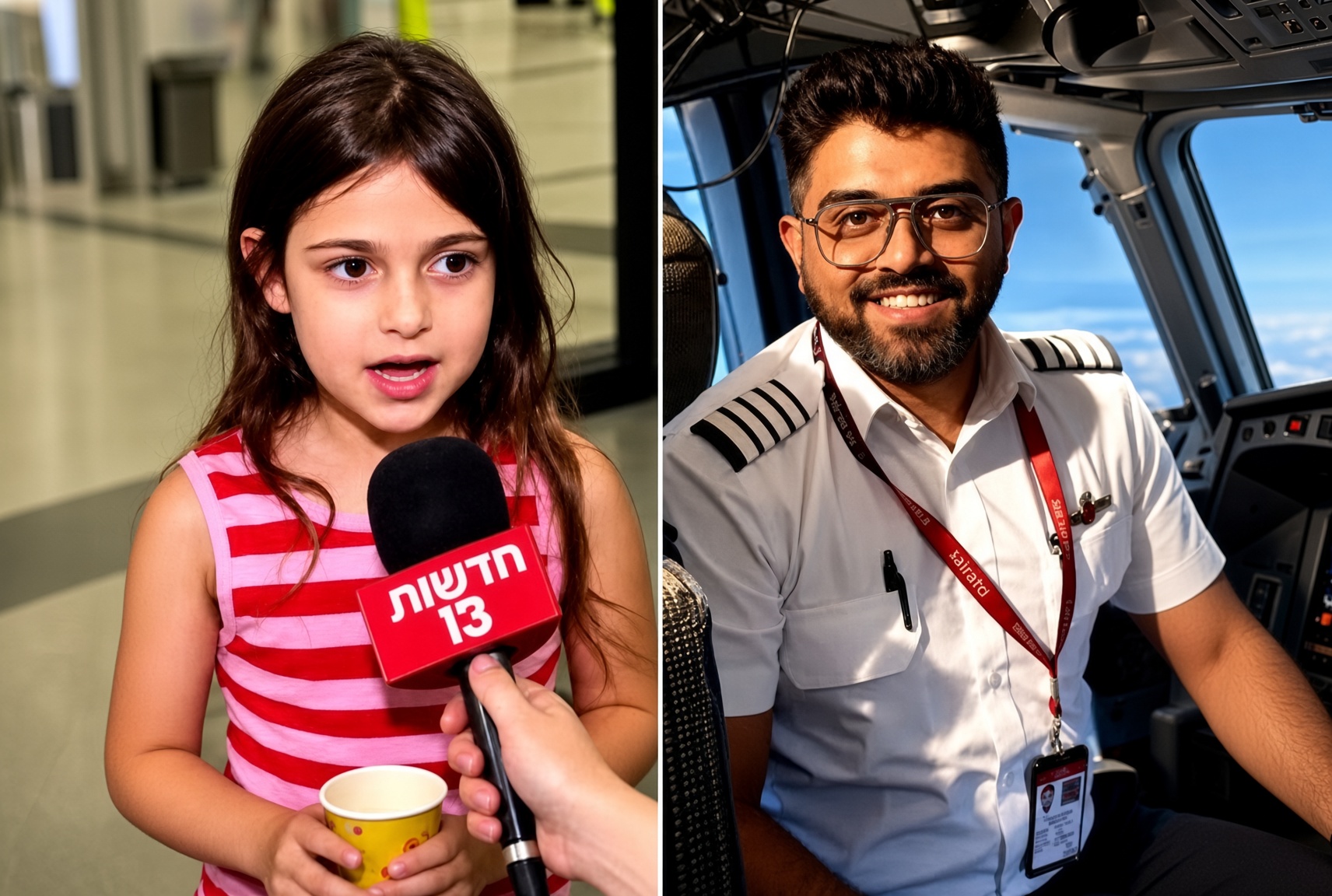
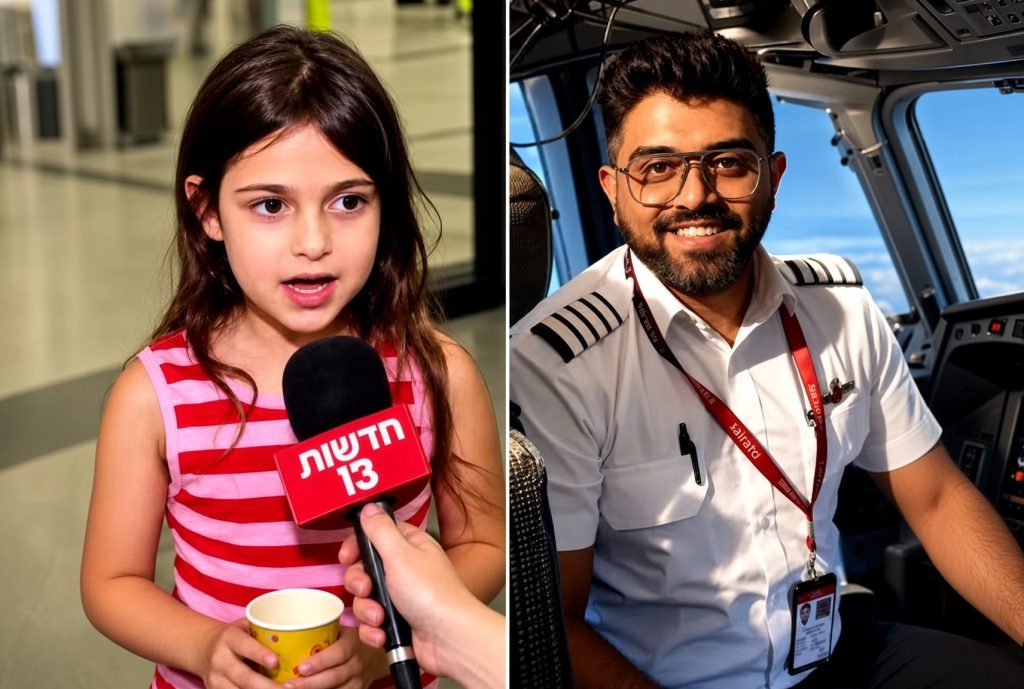
Image collage – Facebook
We live not simply in a news-driven world, but in an emergency, super-eventful, force-majeure, rapidly changing, sensational world, where one dawn hastens to replace another, allowing night barely half an hour. And sometimes there isn’t even half an hour between the landmark and consequential facts of our contemporary reality. Of course, not all sensations are created equal. There are one-day sensations, and there are sensations with staying power, sensations that fly straight into history.
The same is true of the Dubai-bound plane carrying Israeli passengers, a story that is already growing layers of facts, fakes and legends, although the official investigation is still in full swing. Yet even now it is clear that the whole episode consists of a chain of miracles that turned a potentially fatal tragedy into an unexpected happy ending. As if the Almighty himself — well, all right, Deus ex machina, as in ancient Greek theater — intervened at the very last moment and, in a matter of minutes, straightened out the inevitable, fatal course of events. Naturally, through the hands of living heroes, just as in that ancient theater.
It all began with six-year-old Nina, who heard screams from the lavatory, woke her mother, who rushed toward the cockpit, saw the captain bleeding heavily, and called for help. Other passengers then came to the rescue, saving the pilot, overpowering the terrorist and correcting the aircraft’s course. Isn’t that a miracle? In fact, it is an entire series of miracles! There is no way God was absent from this one. I am convinced of it, despite being an agnostic.
Naturally, this sensation will go down in history, and no other sensation is likely to match it in the foreseeable future.
There are plenty of sensations connected with my geographical homeland as well — from an outbreak of pneumonic plague in the Irkutsk region to a communist demonstration in Presnya, where young people were chanting “Down with the Tsar!” and “Freedom for political prisoners!” before being shoved by the dozen into vans marked “Bread.”
Yet these are precisely the sensations one can afford to ignore, because they have no future. Fortunately, the likelihood of a plague epidemic in Russia — a developed, albeit backward, country — is negligible, unlike Madagascar and the Congo, where outbreaks occur from time to time. And unfortunately, there will be no sequel to the anti-Putin demonstration in Presnya, because the Kremlin gangster-boss keeps his patrimonial, serf-like country in an iron grip, and any changes there are possible only after his departure — and even then, from above.
Even the daily and nightly Rashist strikes on Kyiv, including the bridges across the Dnipro, however regrettable in themselves, will have no impact whatsoever on the course of World War III, which is now raging at full force in the Middle East and Europe, involving — directly, through hybrid warfare, or by proxy — roughly fifty countries from every continent except Antarctica.
From a historical point of view, all this is small stuff that will soon sink into oblivion. Nobody will remember these one-day sensations before long.
Yet it is precisely on the European theater of World War III that fundamental, radical and irreversible changes are taking place — and not in favor of the instigator of this war.
I emphasize: the European theater. Because what matters more — the German chancellor’s visit to Kyiv the other day, or the Rashist bombing of the Ukrainian capital on that same day? Obviously, the German chancellor’s visit.
Not only because he brought a multibillion-dollar aid package, but because he also pledged to defend Ukraine to the very end — until its victory over the aggressor and occupier. And all this was accompanied by reports coming out of Germany that the country is not merely preparing for a military confrontation with Russia, but is already ready for one.
And Germany is not alone. Most European countries are moving in the same direction.
Take Finland, which already has experience of war with Russia. Although Finland surrendered some of its territory at the time, it destroyed roughly a million invaders and thwarted Stalin’s plan to turn the country into a Soviet satellite. It remains an open question who actually won that war.
Well, today Finland, having abandoned its neutrality and joined NATO, has armed itself to the teeth and prepared its population for the coming war, with the backing of the United States.
Credit is also due to Donald Trump, who, despite his often justified criticism of America’s allies, is increasing the American military presence in Europe. In addition to the existing military bases, he promises new ones in Poland and the Baltic states. The question of American nuclear weapons in European countries remains open.
As for the Russian-Ukrainian war itself, in which the Rashists have already suffered one and a half million casualties, September was the bloodiest month of this entire idiotic war, while in October the number of daily sanitary losses crossed the two-thousand mark for the first time.
All right, Russians have historically been insensitive to casualties.
Yet this year the heroic Ukrainians have managed to halt the enemy’s offensive, seize the initiative and go over to the counteroffensive along almost the entire front.
And what about the operation with the highly suggestive name “Vivaldi” in Donetsk region — territory Russia has failed to fully conquer in ten years of war? That alone is worth something!
Putin pressured Witkoff and Kushner to persuade Trump, and Trump to persuade Zelensky to give it away for free.
Dreams, dreams — where is your sweetness?
“Otherwise, we’ll take it back ourselves,” said this Anika the Warrior to Trump’s envoys at their latest Kremlin meeting.
And Jared gave him a fitting answer:
“You told us that last year. You’ll tell us the same thing next year.”
During Operation “Vivaldi,” some 140 square kilometers have already been liberated. Russian losses have risen from 30–32,000 to 42,000 men a month. The operation has gone through three stages, while the Italian composer’s famous composition, as everyone knows, is called The Four Seasons.
We shall wait and see.
And we won’t have to wait long.
I am talking now about other, even more important prospects.
One of Russia’s principal advantages is its ballistic-missile capability — something Ukraine does not possess. The only defense against Rashist ballistic missiles is the American Patriot system, and missiles for those systems are in short supply not only in Ukraine, but in America itself.
So Ukraine has been painstakingly gathering them, missile by missile, from its European allies and has finally secured Trump’s authorization to manufacture them in Ukraine itself.
But there is another form of defense: its own ballistic missiles and anti-ballistic systems.
That is precisely what the great Ukrainian, Denis Shtilerman, and his fantastical company, Fire Point, are working on around the clock — twenty-five hours a day, if necessary.
The first combat launch of the FP-7 tactical ballistic missile has already taken place, with a range of up to 200 kilometers and a 150-kilogram warhead.
That is not enough — not simply for ballistic parity with the Rashists and the protection of Ukraine’s civilian population, but for a decisive turning point in the war.
A heavier ballistic missile is needed, one capable of reaching Moscow.
The principle is mirror-imaging: if Russia strikes the mother of all cities with ballistic missiles, there must be a response against the capital of Muscovy.
That is what prompted the Ukrainian president to call Shtilerman:
“Where is my FP-9? I need the FP-9!”
To quote his interview with Reuters verbatim:
“I am confident that this missile will be with us already this autumn.”
The FP-9 has a range of 855 kilometers and an 800-kilogram warhead.
It can reach Moscow.
Escalation?
Undoubtedly.
An escalation that is both desirable and desired.
Meanwhile, we are in the middle of “Nobel Week,” when the winners of the world’s highest prizes are announced, and predictions and betting concern not the exact sciences or economics, but only two prizes — Literature and Peace.
As for the latter, one of the likely candidates for the Nobel Peace Prize is the Ukrainian president, whatever one may think of him.
I shall refrain from making predictions, although I know more than I say.

Владимир Исаакович Соловьев – известный русско-американский писатель, мемуарист, критик, политолог.
Эта рассылка с самыми интересными материалами с нашего сайта. Она приходит к вам на e-mail каждый день по утрам.