Self-defense is a duty, not a choice.
Talmud, Sanhedrin 72a.
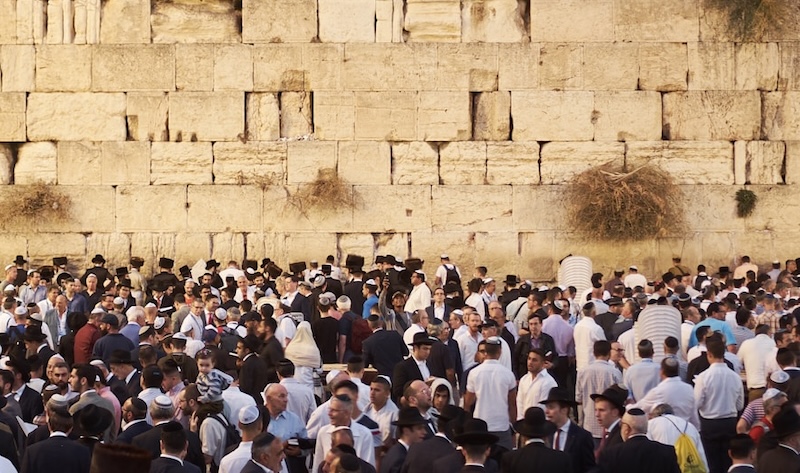
Photo by Bruno Aguirre on Unsplash
New York City Mayor Mamdani remained true to his convictions and promises, and one of his first decrees was to cancel police protection for synagogues and Jewish events.
Until recently, several police cars were stationed at the Central Synagogue, Temple Emanuel, and Park East Synagogue on Shabbat and holidays. Many Jews saw this as the authorities’ concern for their safety, while for anti-Semites it was evidence of Jewish privileges.
The need for armed protection of religious institutions—clear evidence of the threatening situation facing Jews—marred the image of a shining city on a hill, where people from different countries and nations, of different faiths and beliefs, live in peace and harmony, enjoying the benefits of liberal democracy.
It is indeed a shameful picture when a house of prayer, a symbol of peace and virtue, must be protected by extraordinary measures. But the demands of reality are more important than public relations, and the current policy of the New York authorities exacerbates the danger and anxiety for Jews.
According to national polls, 72% of Americans consider anti-Semitism a real problem, 80% of Jews are concerned about anti-Semitism and feel less safe, and 55% have personally experienced acts of anti-Semitism. Over 10,000 anti-Semitic attacks and acts of vandalism were reported in the U.S. over the past year, and this is only a small part of the overall picture; most victims do not report incidents to the police. Anti-Semitism is becoming increasingly normalized, masquerading as anti-Zionism and the right to free speech and assembly.
Jews, who make up 2% of the country’s population, account for about 60% of hate crimes; mass rallies with anti-Israel and anti-Zionist slogans are held constantly; a Jew wearing religious clothing, a kippah, or a Star of David puts himself at daily risk.
Mamdani’s pre-election call for a global intifada has found widespread support; for the first time in history, anti-Semitism has taken on a global scale. The election as mayor of a city that epitomizes the image of America and the free world of an open anti-Semite speaks more clearly than any sociological survey to the situation and mood in the country.
Jewish communityes and organizations were completely unprepared for the current turn of events. For Jews who left the Soviet Union and Muslim countries in the hope of escaping a life of hatred and threats, this new reality—which resembles the past—is particularly painful. There are many parallels with the situation of European Jews on the eve of World War II.
The situation is exacerbated by the fact that most Jews support the Democratic Party, which has become a refuge for “progressive” anti-Semites, and are obsessed with fighting Trump, the staunchest defender of Jews in the history of the U.S. government.
Anti-Semites do not distinguish between liberals and conservatives, left and right; for them, there are no good Jews. Jews—liberals, reformists, “peaceniks” and supporters of the Palestinians—continue to hope on good deeds, education, meetings, and agreements, but they too must adapt to a new reality and think about security.
In major religious centers, there are metal detectors, bag checks, heightened internal security, off-duty police officers, and security agents authorized to carry weapons. Some hotheads are pushing the idea of arming community members, which could only exacerbate dangerous consequences in crowded areas.
For many years, Betar, a paramilitary organization founded in 1923 by Ze’ev Jabotinsky as a Zionist youth movement, played a prominent role in protecting Jews. Betar’s American branch actively opposed anti-Israel chaos on college campuses and the harassment of Jewish students.
But recently, following an investigation by New York Attorney General Letitia James, the organization was accused of harassing pro-Palestinian activists, illegal possession of weapons, and promoting violence. The Anti-Defamation League, which in the past played an important role in combating anti-Semitism, has classified Betar as a “hate group,” effectively ending the organization’s activities in New York.
More severe measures were taken against the Jewish Defense League, organized by Rabbi Meir Kahane, who was killed by an Arab terrorist. Recently, the FBI arrested Andre Heifler, who, according to the indictment, planned to set fire to the home of a pro-Palestinian activist. An undercover FBI agent helped him prepare a Molotov cocktail. This incident received widespread attention, and some Jewish groups have expressed surprise as to why similar measures are not used to prevent hate crimes committed by numerous anti-Semitic groups.
A clear indicator of the current conditions of Jewish life is the mass protests against Israel and Zionism, the state of education and culture, the mood among ethnic minorities, the stance of the liberal media, the lawlessness on social media, and the strengthening of anti-Semitic positions in politics and government institutions.
Under current conditions, rather than relying on the goodwill of the authorities and legal protection, one must rely on one’s own resources. The Security Community Network is an official organization that ensures the safety of Jews in America. It is licensed and cooperates with the police. Other organizations, mostly volunteer-based, guard synagogues and other Jewish institutions and monitor social media platforms spreading anti-Semitic propaganda.
The UJA Federation helped fund a mobile street patrol program in New York City. All participants are volunteers who have undergone special training and are armed.
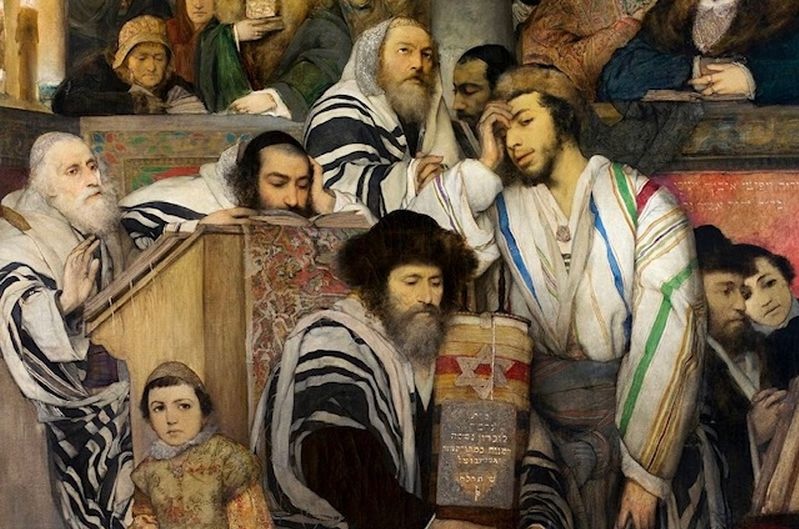
Jewish organizations in America spend about $800 million a year on security, which is about 15% of their budget. Without police protection, these costs would rise significantly. Christian organizations have virtually no such expenses; church doors are wide open without any security checks.
On the eve of Passover, a terrorist from Lebanon who had obtained U.S. citizenship drove a car filled with explosives and gasoline cans toward Temple Israel, the largest synagogue in Michigan. There were 150 children in the synagogue at the time. Internal security prevented a horrific disaster; the building was damaged, but there were no casualties.
The terrorist, a supporter of Hezbollah and Iran, expressed on social media his intention to “kill as many of them as I can.” The mainstream media did not fail to emphasize that the terrorist’s two brothers, members of Hezbollah, had been killed by the Israeli army, but, as always, did not deem it necessary to point out that these “innocent victims” would be alive and well if Israel were not living under a constant threat of aggression, terror, and provocations, if terrorists were not hiding in residential areas, and if international organizations could stop—rather than support—forces seeking to destroy the Jewish state.
Many Jewish activists receive constant threats but remain unprotected. Rabbi Shmuli Boteach and his family have been subjected to attacks, harassment, and threats of physical violence. So far, there is no help in sight; law enforcement only recommends vigilance and caution.
There is little hope that Jewish self-defense groups can provide reliable protection; their capabilities are limited. It is necessarly to change the social climate, restrict entry and deport migrants from countries where anti-Semitism is cultivated, and establish boundaries for free speech and protests that prevent hatred…
Solving these problems is beyond the reach of even Trump, and the outlook is even bleaker. New demographics and generational shifts determine the future outcomes of elections, as well as the direction of the media, education, and culture.
But no one has ever succeeded in building a long-term policy on anti-Semitism. Sooner or later, reality will force a shift in focus to real domestic and foreign issues, and anti-Semitism will no longer serve as political capital.
But for now, we have to make do with the means at our disposal. During Passover, heightened security measures were implemented in all synagogues. At Chabad on 58th Street in Manhattan, I met Yakov Novik, who previously served at Nova Drone Technologies in Israel and now works for a Jewish security agency. He demonstrated his latest professional equipment to me in great detail. It’s impressive, but I won’t go into specifics.
Yakov was born in America to parents from Ukraine. In Israel, he underwent military selection board four times; he was eager to see combat, but was offered a staff position instead. He went to the West Bank to guard settlers—there was never any security there. Yakov participated in rescue operations following the terrorist attack on October 7.
He says that Israelis understand the real threat, while American Jews remain under the illusion of treaties, aid, and peace; they do not see the danger. That is why he is now in New York, and until the coming of the Messiah, he sees this as his mission.
Yakov says that Jews must face reality and not expose themselves to unnecessary risk; even a kippah is not always appropriate everywhere. But what about the Orthodox and Hasidim? They find their protection in prayer and the Torah, yet they bear the brunt of hateful acts.
In Europe, most Jews do not display visible religious symbols and are deeply assimilated, yet the situation is even worse than in America; the perception is growing that Jewish history on the Old Continent is coming to an end. What awaits American Jews after Trump, only God knows.
Эта рассылка с самыми интересными материалами с нашего сайта. Она приходит к вам на e-mail каждый день по утрам.