 КОНТИНЕНТ - Новости и аналитика актуальных событий в мире, мнения и комментарии экспертов и обозревателей
Every society has the culture it deserves.
Attributed to philosopher Joseph de Maistre.
Michel Houellebecq’s famous novel Submission, published in 2015, depicts France when the leader of the Muslim Brotherhood peacefully and democratically becomes president of the Fifth Republic, and the country transitions to living under Sharia law. What seemed like satire and dystopia just 10 years ago has become a very real prospect in many Western countries.
Who determines the future?
Fundamental changes in Western society are driven not so much by economics, technological progress, and education as by rapid changes in the demographic structure. Today, whites make up 8% of the world’s population, with a birth rate below simple reproduction. At the same time, in the Western countries birth rate among minorities is 3–4 times higher than among whites. The point of no return has been passed. This is no longer a problem of laws, politics, and governance; it is destiny and history.
Democracy gives unprecedented rights, freedoms, and support to minorities, and even though they are outnumbered, it allows them not only to lead a distinctive lifestyle, rejecting assimilation, but also to dictate their demands contrary to the interests of the majority.
It is not at all certain that the fall of Western civilization will come about as a result of revolutions and terror. In Houellebecq’s novel, the “moderate Muslims” who despise fanatical Islamists and their barbaric methods prevail. Demographics solve all the problems of power and the organization of life, and whites, having lost their national consciousness and values, capitulate without resistance. The main character of the novel, a university professor, repents for his sinful past, converts to Islam, and lives according to Sharia law.
Liberal democracy actively contributes to the destruction of the traditional way of life. Brigitte Bardot, a national icon of France, declared, “I am against the Islamization of France,” and was repeatedly prosecuted for “racial hatred.” Left-wing parties and liberal media outlets turned against her. “She tarnished her legacy with frequent racist, Islamophobic, and homophobic comments and mockery of the Me Too movement,” wrote The New York Times in an article about her death.
Many works of literature and art have been censored and self-censored because they do not fit into the ideology of political correctness. Education, the media, and popular culture have unquestioningly accepted the postulates of guilt and responsibility of Western civilization for all the misfortunes and injustices in human history.
Musical genres vividly reflect changes in cultural development and social values. Western civilization has created the greatest and unsurpassed musical culture in the world. Attitudes toward classical music are one of the most important criteria for assessing the intellectual and spiritual state of society and individuals.
But at mass public events, in restaurants, and sports clubs, electronic trap, drop, and gangsta rap are played at brain-numbing volumes. An aggressive, psyche-destroying repertoire is constantly playing in the headphones of the vast majority of young people. This is not just bad taste; it is anthropological degradation. Many performers of these genres, portraying themselves as gangsters, drug addicts, and lunatics, have gained fame and fortune, becoming national celebrities.
Nevertheless, the pathology of sound and meaning finds explanations and justifications in the atmosphere of the time: it is a protest movement for freedom and justice, overcoming the legacy of colonialism, slavery, and lawlessness, drawing attention to the culture of discriminated minorities. But minority culture in the past produced magnificent examples of musical creativity and genuine talent: jazz, blues, ragtime, swing, soul, spirituals, gospel… How could all this give way to the current destructive primitivism?
To paraphrase the American idiom “Don’t shoot the musicians…”, one can find an explanation: mass, market-driven, commercial culture responds to consumer demands, not to the dictates of aesthetes and moralists. Society is dominated by antagonism, nihilism, disunity, loss of ideals, distrust of authority and the elite, and pessimism. Seventy percent have lost faith in the American dream, and the majority believe that the country is in decline and heading in the wrong direction. With such public sentiment, cultural degradation is a consequence, not a cause.
One of the most famous voices of public demand has been African-American rapper Kanye West. His father is a former member of the Black Panthers, later a preacher, and his mother is a professor. West, a college dropout, became a best-selling artist and billionaire. His widespread popularity gave him the basis to proclaim himself a great philosopher and run for president of the country. His hit song, the political declaration “Hail Hitler,” was played at a gathering of anti-Semitic influencers in Miami and received millions of views. West’s virulent anti-Semitism is widely represented on social media.
West has a clinical diagnosis of mental illness, but in a liberal democracy, this is not an obstacle to a career. Michel Foucault, a leading authority on contemporary pathopsychology, argues that only people with mental disorders are capable of true creativity, while a normal psyche produces boring banalities.
West recently decided to reconsider his views on the world and Jews, and published advertisements with repentance in the WSJ and other publications. Not everyone believes in the sincerity of West’s repentance, but I don’t know which is better, an open anti-Semite or one covered up by PR. He came to the great Kabbalist Rabbi Pinto for a blessing. Pinto’s activities take place mainly in Israel and Morocco; he does not visit America often, and not everyone is granted an audience with him; there is a long line of major businessmen and celebrities waiting to see him. His advice is quite pragmatic; he believes that faith does not replace reason. Malicious tongues link blessings with donations; I cannot judge, but I can testify that my meeting with Pinto under very strange circumstances cost me neither money nor effort, and waiting, and left a very strong impression.
The story of West is associated with another rapper, Zohran Mamdani, a “proud Muslim,” in his own words. Mamdani’s anti-Semitic stance had a decisive influence on his victory in the New York mayoral election. After his election, Mamdani visited synagogues and traveled to the grave of Rebbe Schneerson. Some saw this as a sign from heaven and a harbinger of good change, while others saw it as cynicism and hypocrisy.
Mamdani is a vivid example of the triumphant march of the new demographics. He is the golden boy of liberal democracy, the Sun King of multiculturalism, a man of the universe, a product of the synthesis of Uganda, South Africa, India, Syria, and the big cities of America, where minorities are already the majority and determine the social atmosphere, politics, culture, and future of the country. He comes from an educated family: his father is a socialist scholar and professor at Columbia University, the cradle of new anti-Semitism; his mother is a well-known film director, festival winner, pro-Palestinian, pro-immigrant activist; his wife is an artist and denouncer of Israel’s “war crimes.”
Famous film director Steven Spielberg, founder of the Shoah Foundation to commemorate the victims of the Holocaust and creator of Schindler’s List, met with Mamdani to discuss creative plans. This did not surprise me much, as Spielberg is also the director of Munich, a film in which understanding and empathy are divided equally between victims and terrorists. He has always had a keen sense of the spirit of the times and market demand.
In high society
High culture cannot rely on self-preservation, competing with pop culture and hip-hop. As in all times, the support of the wealthy elite helps. The US has a powerful charity system with an annual budget of about $500 billion, including $25 billion for culture.
The most famous halls are named not after great artists, but after the super-rich, preoccupied with vanity and the desire to leave their mark on history. But fame is short-lived; a richer patron will come along, and the name on the facade will change. Any part of the building, interior, or seats with names and plaques—anything that can be put up for sale.
The main source of funding is not the box office, not the state, but sponsors. They often have their own ideas and opinions about the choice of repertoire and performers, and must be treated with the protocol of a royal court. A sponsor who gives a lot of money and does not interfere in anything, or an anonymous benefactor, is a godsend, and such things do not happen often.
Sponsors are often criticized for being conservative, hindering innovation and new names in the repertoire, and preferring Bach, Beethoven, and Mahler, Aida, Carmen, and La Bohème, which leads to “museumification.” In my opinion, they deserve gratitude for this. Under the pressure of political correctness, politicking, ideology, propaganda, and simply mediocrity are penetrating the classical stage. The correction of history, the acute problem of modernity, social justice, and the difficult childhood of the composer and performer are not arguments here.
The Metropolitan Opera is one of the most famous musical theaters in the world, a symbol of creative freedom, supreme artistic mastery, and the cultural image of America. For many years, it was believed that the Met had unlimited resources, allowing it to invite the world’s most famous artists and carry out expensive projects.
But the theater found itself in a critical situation. Instead of the usual 25 or more productions in the repertoire, there will be only 17. Administrative staff have been reduced and their salaries cut. The need to sell Chagall’s monumental paintings is being considered. Musicals and pop culture will be allowed at the Met. And the name of a super-patron will appear on the facade, previously untainted by commerce, as on other halls of the Lincoln Center.
But all this is not enough. The salvation will be $200 million from Saudi Arabia. The agreement will be further evidence of the influence of Islamic states on all aspects of American life. It is no news that money has no smell in a market economy. But it is striking that the contract provides for an extended tour of the Met in Saudi Arabia, a country governed by Sharia law, which prohibits listening to women singing and seeing women who are not covered by a hijab.
How will this contradiction be overcome? In ancient times, there were operas in which female roles were sung by castrati or travesti – actors playing roles of the opposite sex. Will this experience be revived? Will a single-sex ensemble be created at the Met? In this day and age, gender reassignment is not a problem. And many men are willing to play female roles. In any case, this problem is not as difficult as persuading the Islamic regime to recognize Israel’s right to exist in security.
In the world of big money, there is an arms race to conquer a prestigious cultural center. One of the halls of the Lincoln Center bore the name of a billionaire benefactor for many years, until another benefactor with ten times more donations came along. The change of the familiar name on the facade caused a cultural shock among visitors.
A major scandal erupted around the mega-sponsors of the owners of “Big Pharma,” who created the opioid crisis in many countries around the world. Their names were featured in the Louvre, the British Museum, the Metropolitan Museum, the Tate, the Guggenheim, Lincoln Center, and other major theaters and museums around the world, which had received huge donations from them for many years. The protests were initiated by my namesake, the famous American artist Nan Goldin, who became addicted to OxyContin. As a result, almost all beneficiaries refused further donations, plaques with the names of benefactors were removed, victims received compensation, and the company went bankrupt. SIC TRANSIT GLORIA MUNDI – “Thus passes earthly glory.”
The mores of high society are of no less interest to the public than the latest cultural events. A long-time sponsor of New York’s musical life published a memoir in which she recounted how, under the influence of a narcoleptic drug produced in her family’s factories, she recovered suppressed memories of psychological trauma during her school years. Twenty-five years later, she had a vision that her teacher had raped her in the bathroom. The accused, now 90, survived a concentration camp, but drug-induced hallucinations are being seriously discussed in the respectable press, scientific circles, and among lawyers.
The famous sponsor of Lincoln Center, at the age of 82, met a penniless dancer, raised in an orphanage, 50 years his junior, and without hesitation, without a financial agreement, married him. The young spouse did not burden himself with moral and financial constraints, and soon the family fell apart. The dancer is demanding millions in compensation for the psychological damage caused to him.
All participants in these scandalous events, except for the African-American dancer, are Jewish, which, as usual, adds spice and interest not only from art lovers but also from the general public, who have no connection to art but always have an acute interest in the “Jewish question”.
Jews have always been proud of their active philanthropy and support for cultural institutions and projects. Presumably, good deeds should contribute to a positive image of philanthropists and counteract anti-Semitic stereotypes. But prejudice is stronger, and good deeds are often used to confirm beliefs about Jewish wealth and influence. If the desire to be in the spotlight is irresistible, then one must think carefully about what a keenly interested public will learn and say about the benefactor.
In today’s philanthropy, it is difficult to separate civic motives from vanity, the struggle for prestige, and access to the elite. The moral code of all times and peoples, religion, and canons have always recognized anonymous donations as the highest form of charity. In concert halls, theaters, museums, and public places, there are always signs listing the main patrons, and the lists are long, but you will rarely see any anonymous names on them.
The music of the Titanic
It is dusk in New York, but not yet night. The city hosts about 100,000 cultural events annually, a significant portion of which are anti-culture, but about 8,000 are considered highbrow. Classical music accounts for only two to three percent of the sales market, and racial and ethnic preferences are clearly evident here: 80% white, 12% Asian, 4% Latino, and 2% black. These differences have nothing to do with discrimination and segregation. Multiculturalism can be viewed not only as integration, but also as coexistence with free choice. There is no need to impose uniform values and preferences.
There was a time when many artists valued personal freedom above all else and wanted nothing to do with politics. Today, there is no need to encourage them; culture is on the barricades, actively participating in party politics, or more precisely, in serving liberal ideology and progressives. Many performers successfully compensate for their lack of talent with politicking and demagoguery. The heroes of the Oscars, Grammys, Emmys, Tonys, and Golden Globes are determined by the degree of physical nudity and pathological obsession with Trump.
In academic genres, positions are more restrained, but even here, politics influences art and art influences politics. Here’s the latest sensation: Philip Glass refused to perform his 15th symphony, dedicated to Lincoln, at the Kennedy Center after the center became the Trump-Kennedy Center. This came as a shock to the National Symphony Orchestra, which commissioned and paid for the symphony in honor of the anniversary of the Declaration of Independence, but the protest received widespread support in the artistic world. Trump responded like Trump: he announced that the Center would be closed for renovation in order to make it the greatest cultural institution in the world.
July 2026 marks the 250th anniversary of the Declaration of Independence. The “Salute to America” anniversary is being led by President Trump. A nationwide festival will be organized. Special programs are being prepared for the anniversary to reflect on “American identity.”
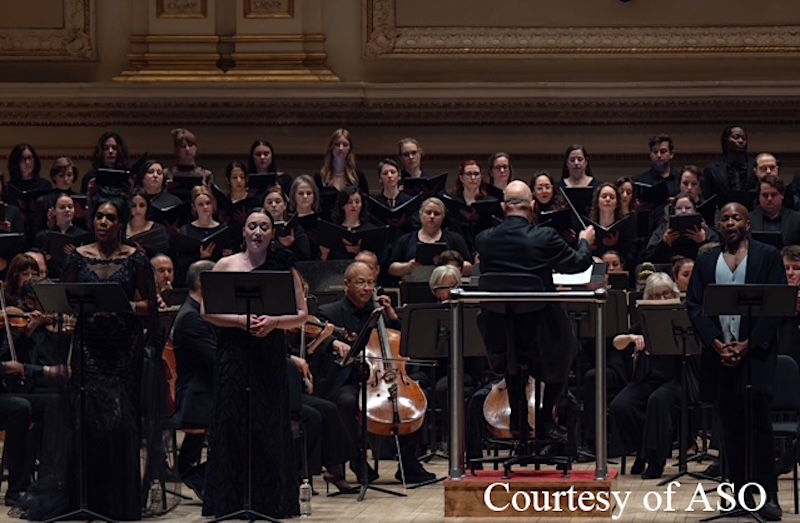
The American Symphony Orchestra, conducted by Leon Botstein, performed at Carnegie Hall with a program entitled “Creating American Musical Identity.” Little-known works were performed with a group of soloists and the Bard College Festival Chorale.
Dudley Buck’s Festival Overture, written in 1879 in honor of Independence Day, is based on the melody of the national anthem. The orchestra, choir, and conductor did a magnificent job. The audience applauded enthusiastically. But I cannot understand why the audience did not stand up during the anthem – Americans are very respectful of national symbols.
The program included spirituals arranged by Harry Burleigh, one of the first African-American composers to gain wide recognition. Spirituals are not only religious songs, but they are also a large part of national culture, formed during the times of slavery and segregation. Soloist J’Nye Bridges, a magnificent soprano and one of the most famous opera stars of our time, knows no genre boundaries, and the African-American sacred melody sounded completely organic in the academic canon.
The name and work of Richard Wagner are by no means symbols of universal equality and unity of people and cultures. But on the 100th anniversary of the Declaration of Independence, patriotic women in Philadelphia commissioned Wagner, then the most famous composer in the world, to write the “Grand Centennial March.” Wagner accepted the offer for 5,000 in gold, which is equivalent to $150,000 today, and honestly admitted that the only good thing about this march was the high fee. He wrote that “Americans pay well, but cannot tell a march from a symphony.” The march was first performed in Philadelphia in 1876 and received a restrained assessment from critics. Even today, it is not considered one of the masterpieces of the creator of “The Ring of the Nibelung,” although Wagner’s worldwide recognition is at its peak.
The concert featured George Bristow’s monumental symphony “Niagara” for choir and orchestra, first performed in 1898 at Carnegie Hall. After its premiere, the symphony was not performed again, although, in my opinion, it is much more interesting and enjoyable to listen to than much of the contemporary repertoire. Bristow is called the founding father of American national music, but he did not achieve widespread fame.
Leon Botstein has earned a reputation as the most intellectual American conductor. He is a doctor of historical sciences, an outstanding educational reformer, and the youngest college president in history – at the age of 23! Botstein often criticizes the musical establishment and sponsors for their “museum policy” and disregard for innovation. He is a liberal in politics, but for 50 years, he has run Bard College and the orchestra with an iron fist, and while criticizing the “feudal” sponsorship system, he is one of its most successful beneficiaries.
The Russian theme has never disappeared from the repertoire of American concert halls and theaters. The Guggenheim Museum’s “Works in Process” series featured three productions related to this theme.
Sergei Prokofiev’s symphonic fairy tale “Peter and the Wolf” is one of the world’s most popular works for children. It was written in 1936, during the Great Terror; the avant-garde composer, who had recently returned from exile with his foreign wife, was under scrutiny, and in such circumstances, choosing a fairy-tale plot was an appropriate decision.
Half of the audience in the hall were children aged five to ten. They were completely absorbed, and everyone was delighted. If children listened to the great composers from this age, it would probably influence not only their musical tastes, but also their state of mind and behavior. Bach, Schumann, Tchaikovsky, Mussorgsky, Saint-Saëns, Ravel, Debussy, and Bartók wrote for children; the choice is vast, but children live in a world of different music.
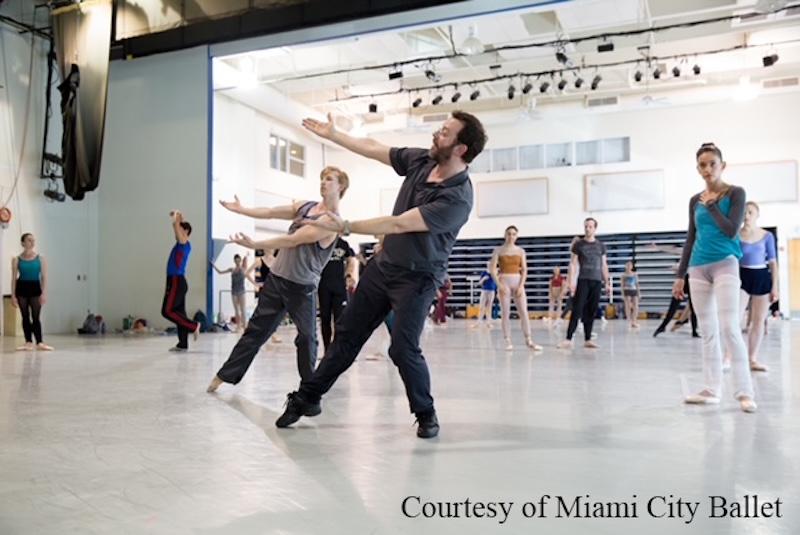
The series “Works in Progress” featured a premiere dedicated to the founder of the Miami Ballet, Toby Ansin. The plot reflects historical traditions and innovative choreography, with music by Johann Strauss.
The ensemble’s director, Alexei Ratmansky, was the artistic director of the National Opera Theatre of Ukraine, the Bolshoi Theatre, the Royal Danish Theatre, the Dutch National Ballet, the American Ballet Theatre, and the New York City Ballet. His productions represent the golden fund of ballet, and he is called the savior of the classics, who has restored elegance, grace, and acting skills to ballet. Critics note that while Balanchine’s school was “architectural,” “geometric,” and athletic, Ratmansky restored “the genetic code and spirituality of classical ballet.”
Post-Soviet life is depicted in the play Mother Russia by Chinese playwright Lauren Yi. The genre is black comedy, which is quite appropriate for the place and time. The author of the play attempts to understand the “deep political and historical trauma” of Russian national psychology and identity. St. Petersburg, the collapse of the Soviet Union, great hopes and expectations, but life develops according to a different scenario. The characters of the play are caught up in the chaos and nightmares of Russian democracy and capitalism. The old world, its ideology, values, and way of life have been destroyed, and the future is beyond prediction and understanding. This is yet another, not particularly successful, attempt to understand the “mysteries” of the Russian soul, Russia’s past and future, but what is worse, the past or the present, and what tomorrow will bring; the question remains open.
In my generation and in my environment, anything that was not part of the classical canon was considered lowbrow. But jazz was treated differently. This genre was viewed with suspicion by party ideology as a product of bourgeois decadence: “Today he plays jazz, tomorrow he will sell his homeland.” Prohibitions and restrictions only aroused interest, and jazz, the forbidden fruit, was perceived not only as a musical genre but also as dissidence.
Contrary to the assessments of party cultural experts, jazz is not a product of bourgeois morals; it originated in the black community of America as a continuation of African music traditions. The stars of jazz were black, and even when white performers appeared, jazz was associated with African-American culture.
From the 1950s onwards, jazz’s popularity in America began to decline. Public tastes changed. Jazz, ragtime, blues, and swing were replaced by hip-hop and pop music. How this happened is a question for psychopathologists, not musicologists.
Here is some sad news: after 50 years on the world stage, the world’s best Royal Jazz Orchestra of San Francisco has ended its performances. The orchestra carefully preserved the heritage of the Silver Age, the Roaring Twenties, and the Great Depression. Concert halls and clubs where jazz was performed for a century have almost disappeared. High musical professionalism has given way to ignorance and primitivism, a cult of aggression and crime.
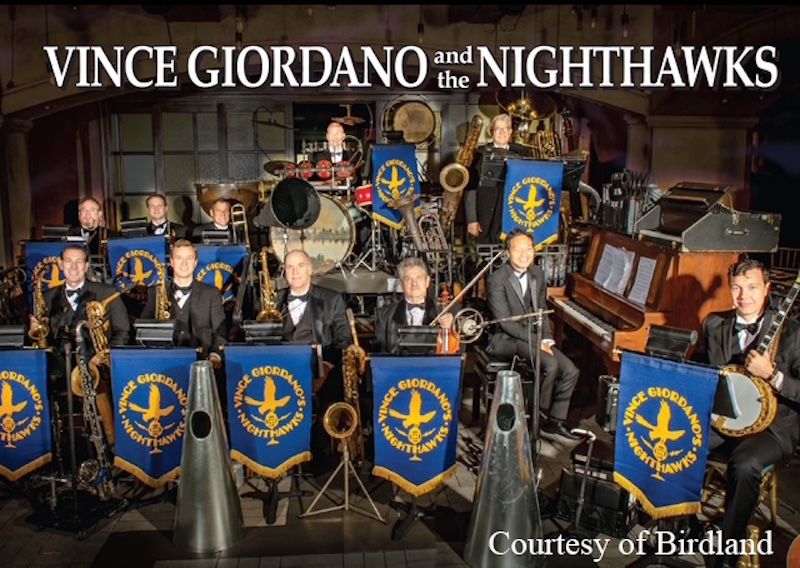
But there are still some last Mohicans. The magnificent Nighthawks orchestra, conducted by Vince Giordano, performs at the Birdland jazz club. The orchestra’s repertoire includes jazz classics, and it is a unified, well-organized ensemble of soloists with bright personalities. All the members are white, and it is their job to preserve the traditions of New Orleans.
The orchestra’s arsenal includes instruments created at the end of the last century in Germany – violins and double basses combined with wind instruments, wind instruments with extensions to modify the sound. These instruments were used in the days of gramophones. They look very strange but create a nostalgic mood. Usually, in jazz clubs, the audience talks freely and reacts noisily, but at Birdland, the atmosphere is different, more restrained.
In addition to the Night Hawks, you can hear other famous orchestras here: the New Orleans High Society, the Louis Armstrong Orchestra of Eternity, Latin Jazz, the Birdland Band, and the Miriam Schneider Orchestra. The legendary club is 77 years old. It is featured in literature, film, and television, and is associated with the names of many celebrities. But in the current atmosphere, it has a difficult life and a very uncertain future.
… They say that when the Titanic sank, the orchestra played the waltz “Autumn Dream,” or, according to another version, church music. The fall of Western civilization is accompanied by the noise and fury of rap.
Эта рассылка с самыми интересными материалами с нашего сайта. Она приходит к вам на e-mail каждый день по утрам.