We live and die in the name of love
Kinsey Institute, Indiana University.
The American Ballet Theatre’s summer tour at the Metropolitan Opera is always a highlight of New York’s cultural life. The company enjoys a world-class reputation as an innovative troupe that preserves the traditions and artistry of classical ballet. The season’s program includes *Onegin*, *Swan Lake*, *Sylvia*, and a new production of *Don Quixote*. Special events include tributes to teacher Irina Kolpakova and the company’s conductors, a children’s program, and Pride Night—celebrating the LGBT community.
“We hope you’ll be able to lose yourselves in the stories we tell and the remarkable talents of the ABT artists. Amid the tensions of today’s world, we all need a moment of escape and inspiration,” says Susan Jaffee, the theater’s artistic director and a former prima ballerina who has earned worldwide acclaim.
Russian themes hold an important place in the history of the ABT. First and foremost, these include ballets set to Tchaikovsky’s music, as well as the extensive participation of Russian choreographers and artists. Recently, “Crime and Punishment” was presented, a successful synthesis of dramatic and ballet artistry. The theater’s performances always draw a large Russian-speaking audience.
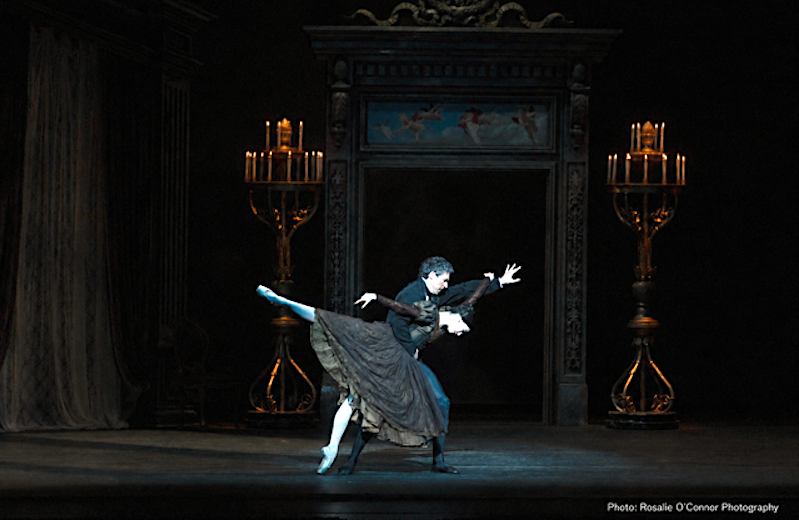
“Onegin,” the highlight of the season, was praised by audiences and critics alike. John Cranko first staged this ballet in 1965 in Stuttgart. The ballet has been performed at the Bolshoi, the Mariinsky, and other theaters around the world. The ballet has been part of the ABT’s repertoire since 2001, with a new version premiering in 2012.
Tchaikovsky’s music is drawn from various works by the composer, and the dancers wear period costumes. The production demands artistic perfection and psychological authenticity. The production features little virtuosic dance; the focus is on developing the characters and their relationships. “Onegin” is the most dramatic ballet in the theater’s repertoire. Seven performances were staged over five days; even with rotating casts, this is an incredible workload for the company.
This season, Calvin Royal as Lensky and Zimmy Coker as Olga were recognized as the stars of the production. Critics praised Cary Stearns and Christine Shevchenko in the roles of Onegin and Tatiana. The climax—Onegin’s encounter with the married Tatyana—elicited a storm of reaction from the audience.
A ballet performance assumes prior knowledge of the plot. The perception of an audience member with a Soviet background will differ from that of someone from a different culture. Pushkin is not as well known abroad as Tolstoy, Dostoevsky, or Chekhov. Therefore, the ballet theater faces a particularly difficult task: to reveal and convey to the audience the psychological depth and historical significance of Pushkin’s novel.
Pushkin is the central iconic figure of Russian national identity, and *Eugene Onegin* is an “Encyclopedia of Russian life.” The novel has been broken down into quotations and catchphrases; many Russians know the poem by heart, but even a well-educated foreigner may not be familiar with *Eugene Onegin*.
Today, attitudes toward Pushkin in Russian-speaking circles are mixed. In Russian schools, students no longer memorize chapters of *Onegin* or write enthusiastic essays about the poet’s opposition to tsarist despotism. The political perception of Pushkin has changed. *The Slanderers of Russia* has sparked disputes and scandals, even leading to the severing of friendships. The poem was written after the Polish Uprising; the world is indignant, condemning Russian imperialism, but for Pushkin, this is “A quarrel among the Slavs themselves,” “Why do you threaten Russia with anathema?”, “Or is it new for us to quarrel with Europe?”, “Or has the Russian grown unaccustomed to victory?” For Pushkin, Russia, Ukraine, Poland, and Lithuania form a single Slavic world – this is a family feud.
At the same time, in a letter to Vyazemsky, Pushkin wrote: “The devil made me be born in Russia with a soul and talent.” In a letter to his wife, he used the same phrase with the addition: “In Russia, where most people are idiots.” In assessing his homeland, Pushkin drew upon the full richness of the Russian language, including profanity.
Regardless of one’s opinion, Pushkin cannot be erased from world literature, just as many other brilliant creators with contradictory biographies and views cannot be. Hardly anyone goes to the ballet or the opera to assess the worldviews of Shakespeare, Walter, Wagner, Dostoevsky, or Stravinsky. Yet those for whom Russian is their native language cannot view *Eugene Onegin* with complete detachment; the stage brings memories and sparks associations.
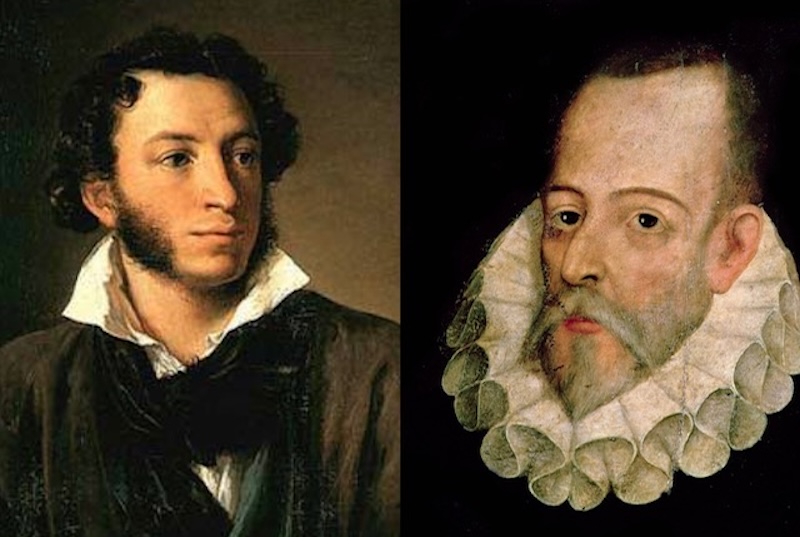
*Eugene Onegin* recently celebrated its 200th anniversary. It is the first Russian realist novel, a masterpiece of classical literature. It is a portrait of an era, a synthesis of genres and styles, containing elements of epic, drama, lyricism, irony, and satire. A vast body of critical literature has been written about the novel; every line has been dissected, and its meanings and imagery have been deconstructed. The political aspect, which dominated Soviet literary criticism, has given way to psychological analysis of the relationship between society and the individual, and the meaning and purpose of existence.
During the Soviet era, the novel’s “national character” was considered its chief merit. Pushkin did indeed create the modern Russian language and vividly reflected the national character, worldview, and way of life. But at the same time, Pushkin’s work is inextricably linked to European culture.
Pushkin called the French his teachers. The novel begins with an epigraph in French, which Pushkin himself devised. Traditionally, *Eugene Onegin* is compared to Byron’s romantic *Childe Harold*. But Pushkin and his hero are not romantics, and they are much closer to the French than to the English. At the Lyceum, Pushkin was called a “Frenchman”; he knew French better than Russian, read mostly in French, and, in terms of his mindset and behavior, was close to the French psychological type. Onegin, like the entire Russian aristocracy, was raised by French governesses, and Tatyana reads romance novels in French.
Despite the wide variety of interpretations and assessments, *Eugene Onegin* is, first and foremost, a novel about love. Love is the dominant theme in art. One can speak of love quietly, intimately, and with restraint, or loudly, in the language of a poster, for the whole world to hear. Philosophers, theologians, and psychologists analyze love, but without teachers or guidance, everyone has their own ideas about love and their own unique experience. Rules and norms are unacceptable here; reason and analysis take a back seat.
In *Letters to a Stranger*, André Maurois offered this aphorism: “If you can explain why you love, then you do not love.” The story of love is not the monopoly of the written word. Love is the most popular theme in ballet. The art of dance allows us to portray love in all its diversity—happy, unhappy, forbidden, secret, healing, painful, fleeting, lifelong, and beyond life itself.
In ballet classics such as *Swan Lake*, *Sleeping Beauty*, *Giselle*, *Romeo and Juliet*, *Don Quixote*, and *The Lady of the Camellias*, unhappy love is more common than happy love, yet the audience is swept up in intense emotions and catharsis regardless of the outcome. If the audience admires the virtuosity but does not weep out of compassion or joy, the ballet has failed.
The language of ballet is the dancer’s body; even in everyday life, body language can speak louder than words to an observant person. The art of ballet does not require verbal expression. “It’s better to remain silent about the oddities of love” (from a song of the Soviet era), because if you launch into reasoning and analysis, you distance yourself, become alienated—no longer immersed in the emotion, but merely an outside observer. Ballet, better than words, lays bare emotions in a natural, organic expression.
In *Onegin*, everything is strange, defying rules and propriety. The modest, innocent, seventeen-year-old Tatyana writes to a dandy she barely knows: “I love you.” This is a scandal for a provincial noble family. Onegin is young, cynical, and worldly; he could have toyed with her and cast her aside, but he prefers to lecture her: “Learn to control yourself,” “Marriage would be torture for us.”
Three years later, Tatyana is a princess, the queen of the ball, unapproachable; Onegin is rejected. “I love you—why beat around the bush?—But I am betrothed to another; I will be faithful to him for the rest of my life.” And all this happens when they essentially do not know each other; they love phantoms—she, in her girlish fantasies and emotions gleaned from novels; he, who instantly fell in love not with a real woman, but with a titled princess, a high-society lady of status—to possess such a trophy would be the envy of the world.
If this were just another clichéd story of romantic love overcoming all obstacles, it would be nothing special. But Pushkin revolutionized the novel, and although he predated Flaubert’s *Madame Bovary* and Tolstoy’s *Anna Karenina*, he challenged them and triumphed. The drama of Pushkin’s heroes is deeper and more compelling. If the fates of Emma and Anna teach us something and imply a resolution—whether a moral choice or social transformation—then the tragedies of love experienced by Pushkin’s heroes are predetermined by the existential nature of man: imperfect, sinful, and subject to temptations and chance; the mysteries of love are unknowable and beyond the reach of reason and moral lessons.
Even stranger is Cervantes’ *Don Quixote*, the most popular novel in history. In terms of print runs, it is second only to the Bible and has been translated into 150 languages. The novel revolutionized culture, worldview, and the conception of humanity. The author intended to destroy the false and foolish chivalric romance. The goal was achieved, but the historical significance of *Don Quixote* is not limited to this; Cervantes blurred the line between reason and madness, between meaning and nonsense. He not only destroyed romantic tales of heroes and beautiful ladies but also triumphed over rationalism by presenting a multidimensional human being.
Don Quixote became the archetype of the struggle for lofty ideals in a society of lies, pretense, selfishness, self-interest, and calculation; a battle against windmills for the sake of a passionate love for the unattainable, most beautiful lady in the world, Dulcinea of Toboso— to whom, in his mind, he had transformed a fat, coarse, illiterate peasant woman. Love as an unattainable ideal, without expectations, without reward—love for love’s sake.
Thousands of critical studies have been written about *Don Quixote*. But the question is why this absurd, laughable hidalgo—the lowest-ranking, penniless nobleman—should be canonized as a universal hero, almost a saint, remains open. The world is full of nihilism, cynicism, self-interest, envy, and the cult of money and power—and yet the first hero is not an oligarch, not a champion, not a rapper, not a shrewd politician, but a pitiful madman?!
In my opinion, it was not literary scholars but the philosopher and psychologist Foucault—himself a madman, with madness as an existential phenomenon at the center of his research—who came closest to understanding this character. He explains Don Quixote through language and context: “Words have become detached from things,” the collapse of an era and civilization. I find this unconvincing. Today, language and civilization are broken and inadequate, but our age honors not Don Quixotes, but their opposites. I’ll draw on other arguments from Foucault—“I and the others.” He believes that a person does not live by their own mind; “others” reign within it.
Don Quixote is truly free, since he is independent of any external conditions or influences. He is the creator of the universe! The freedoms and choices within which we live are illusions; they are predetermined, stamped out, and censored by place and time, upbringing, ideology, and culture. It is not you, but others, who decide in your mind what is true, what is false, what is right or wrong, what is necessary and what is not. But Don Quixote is the master of his own mind; no one dictates to him; he is unconcerned with the world’s opinion, gain, or loss. He alone is free from both men and gods! All we can do is marvel and admire.
No art form has been untouched by Don Quixote. In 1869, Marius Petipa staged *Don Quixote* to music by Ludwig Minkus. Here, Don Quixote is not the main character; the focus is on the love between Kitri, the innkeeper’s daughter, and Basilio, a poor barber—a struggle for personal happiness, with no questions about the meaning or purpose of life. What draws audiences to the ballet is not Cervantes’ ideas, but the virtuoso classical dance, fouettés, dizzying jumps, and lifts. The corps de ballet is brilliant—not mere supporting cast, but a force in its own right. In its ballet interpretation, *Don Quixote* is a perennial favorite with every audience.
“Don Quixote” is the antithesis of “Eugene Onegin”; here, earthly love triumphs over fantasies, spiritual quests, suffering, and hopelessness. All of this relates to Cervantes only through the ballet’s title and the names of the characters. That said, one can still find a reason here to reflect on a timely theme: don’t rack your brains over grand ideas and problems, but do what you can for yourself and your loved ones.
The ABT presented *Don Quixote* in a new production by Susan Jaffe and Susan Jones. This is the fourth version of the ballet in the theater’s repertoire. The first was in 1987, staged by Mikhail Baryshnikov and Alexander Gorsky. In some versions, Don Quixote and Dulcinea are barely noticeable, but in the current one, they are given due attention. The role of Don Quixote was danced by Roman Zhurbin, Kitri by Devon Teuscher, and Basilio is played by Andréw Robare.
My life partner has danced on the Met stage, has seen the superstars of choreography and dance, and can offer a professional assessment; in her opinion, the ABT has managed to elevate the ballet to new heights, preserving the greatest artistry and enriching the creative vision; one of the greatest company in the world.
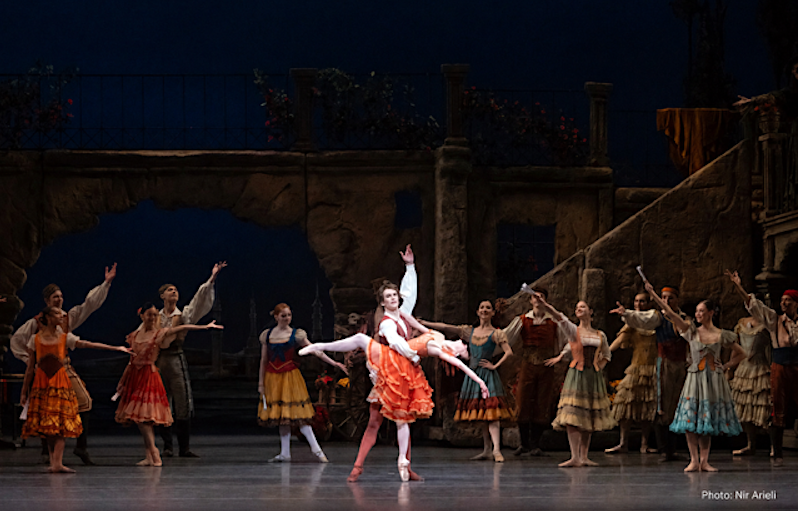
Today there is much talk about the alarming state of the nation’s mental health; every day, the news brings new reasons for anxiety and depression. There is no better antidote than *Don Quixote*. The audience finds respite from the worries and passions of life; time and money are not spent in vain—it is a feast for the heart, psychotherapy, joy, and delight.
The performance is met with endless applause. The audience is ecstatic. Yet it is still strange to see people in shorts, T-shirts, and sneakers, carrying heavy bags and backpacks, in this world-renowned cultural center. Then again, Don Quixote didn’t care how he looked, or about his clothes and armor. He is independent of others’ opinions and tastes; he has stars in his head and a radiance above his head. Perhaps the people in shorts do too.
“Don Quixote” was the first ballet I saw during the golden age of Soviet ballet. I don’t remember who danced the other roles, but Tamara Varlamova’s Kitri and Dulcinea made a stunning impression. Most often, a single ballerina dances both roles, playing on the contrasts between the earthly and the heavenly.
I waited for Tamara after the performance; we met, and she shaped my earliest impressions of ballet; what is called “contemporary ballet” does not exist for me to this day. One can do without fouettés, pirouettes, and antirash, but the slightest movement of the hand, a turn of the head, a glance—grace—must transport one to other worlds.
Varlamova danced at the Bolshoi Theater from the 1950s to the 1980s. A lyrical ballerina, the ideal lady of one’s dreams. The character of Dulcinea largely mirrored her own personality—aristocratic, reserved, free of harsh edges and judgments, aloof from worldly vanity. Varlamova danced the adagio—the most enchanting, celestial music in Minkus’s ballet. In Dulcinea, her soul shone through; in Kitri, her technique was brilliant and flawless.
At that time, the Bolshoi Theater featured Plisetskaya, Timofeeva, Struchkova, Bessmertnaya, Maximova, and Ryabinkina—the golden age of Soviet and world ballet. The competition and the customs were brutal, but Tamara did not engage in such rivalries; she was not subject to the customs of court theater.
Time and place shape and transform perceptions and judgments; each era brings its own values and meanings, its own sense of truth and beauty. Art is a record of an era, with all its realities and fantasies. So there’s no need to compare. We can simply enjoy the best of different worlds. We live in a world of rapid, sweeping reevaluations of values. But great ballet is not subject to shifts in paradigms and worldviews. It is the apotheosis, the standard of beauty for all time.
Эта рассылка с самыми интересными материалами с нашего сайта. Она приходит к вам на e-mail каждый день по утрам.