 КОНТИНЕНТ - Новости и аналитика актуальных событий в мире, мнения и комментарии экспертов и обозревателей
Everything has its time… A time to be born, and a time to die.
Ecclesiastes 3:1

Jews account for 15–20 percent of the greatest literary works, but only 0.2 percent of the world’s population. Jews are the authors of the Bible, the greatest and most influential book in human history. Even under conditions of millennia of persecution and prohibitions, their intellectual and creative work continued uninterrupted.
People of the Book
The Jews created not only the Torah, but also the New Testament, and all the apostles were Jews. Jesus and his disciples were part of the Jewish community, and Christianity is based on Jewish sacred writings. Muhammad called the Jews “People of the Book” and recognized that they had received divine revelation.
The Bible is the basic model, the paragon of the Western literary canon, an inimitable example and source of revelation of human nature and relationships with the earthly and sacred worlds. This applies to any literary work marked by philosophical and psychological depth and artistic merit.
The Bible reveals archetypes and types of thinking, character, and behavior, the conflicts and contradictions of reason and emotion, desires and duty, and the biological and social essence of man. The greatest compliment to a book is biblical depth and truth. If copyright laws had been in effect since biblical times, all the inhabitants of the literary Olympus would have had to pay for the use of intellectual property.
After the European revolutions, Jews were able to break out of their ghettos and ostracism and became active participants in the world literary process. The treasure trove of the world library includes books by Proust, Kafka, Zweig, Feuchtwanger, Cohen, Babel, Pasternak, Brodsky, Bellow, Mailer, Roth, and the list goes on and on.
Most Jewish writers sought to become part of world culture, to overcome provincial psychology, and the path to that lay through assimilation and social integration. But even those who avoided Jewish themes and distanced themselves from their ancestral ties could not abstract themselves from their Jewish fate. Charles Swann in In Search of Lost Time is more aristocratic in his culture and manners than the counts, marquises, and barons among whom he, like his author, sought to find his place, but remained an outsider, at a distance. No matter how great the desire to become a citizen of the universe, no matter how high one climbs, no matter what circulation one achieves, to the outside world, a Jew was and remains a Jew.
In post-war Europe and America, Jews really wanted to believe that liberal democracy, globalism, and multiculturalism would destroy prejudice. The Jewish creative intelligentsia of the West mostly retains these hopes and believes in the ideas of universal equality, understanding, and cooperation.
But the work of a talented author does not always follow his convictions and intentions. Contrary to ideology, a great writer is always a prophet who follows the biblical covenant, a realist who honestly and fearlessly reflects the picture of the world and human nature.
Far from the tree
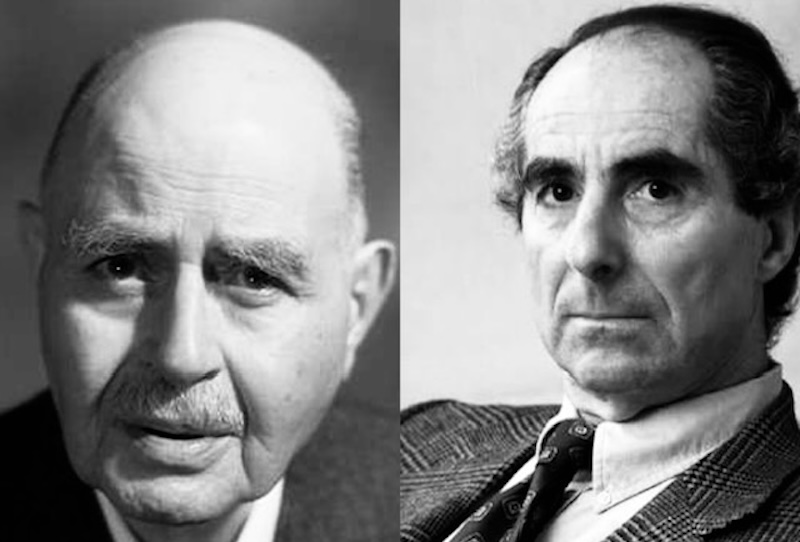
Albert Cohen and Philip Roth occupy a special place in the literary canon of our time. Both are titans of thought and word, of innovative experimentation. But Cohen was close to Zionism and contributed to the creation of the Jewish state, while Roth was alienated from Israel and hostile to the Orthodox. Cohen was buried in a Jewish cemetery with all the rituals, while the atheist Roth was buried in the cemetery of the liberal Bard College, and took special care to ensure that there was no rabbi at his funeral.
Cohen was born in Greece and studied in France and Switzerland. He was the director of the Jewish Review, in which Albert Einstein and Sigmund Freud participated, collaborated with Chaim Weizmann, president of the Zionist Organization, and helped Jewish refugees emigrate to Palestine. Before World War II, he worked for the International Labor Organization in Geneva. In 1940, he fled to London. After the war, he worked for organizations that helped Jewish refugees.
Cohen wrote little, but his novel Belle du Seigneur (in the Russian edition, “The Love of the Master”) became a unique literary phenomenon. Those who did not watch the film based on this novel were fortunate. Film adaptations of great literary works are almost always unsuccessful, and any attempt to convey the philosophical and psychological depth of Cohen’s book through the medium of film is doomed from the outset. It is a very difficult read in terms of content and form, and it will not bring you joy, but it will definitely broaden your understanding of human nature and relationships.
Roth left behind a large literary legacy—38 books. He rose to immense popularity immediately with Goodbye, Columbus and Portnoy’s Complaint. The Nathan Zuckerman and David Kepesh series elevated him to the canon and, at the same time, made him a destroyer of the canon. He was admired and resented with equal enthusiasm. Conservatives, especially Orthodox Jews, saw him as a destroyer of morality, an anti-Semitic Jew, and liberals saw him as a misogynist and a racist. People close to him were indignant when they saw themselves in his recognizable portraits. Roth did not remain indebted, fighting his critics, multiplying their numbers and exacerbating the accusations.
In his will, Roth granted Blake Bailey unlimited access to his archives on the condition that he imposed on his books: it must not be boring. The 900-page biography caused a huge scandal. Both Roth and Bailey came under a total “MeToo” attack, and the publisher withdrew the entire print run from stores a few days after publication. Later, the book was published by another, lesser-known publisher. (I can’t resist bragging: I have a copy of the first edition.)
At first glance, the two authors and their work have little in common. But when I recently reread Belle du Seigneur, where the period before World War II bears many similarities to the current living conditions of Jews, I saw other parallels.
I was somewhat acquainted with Roth; he told me why Tolstoy is impossible in our time, that writers should give up their messianic pretensions, and he spoke very bitterly about the Nobel Committee: they don’t understand literature, even if you hit them in the face with a dead fish. The metaphor stuck with me, although I cannot understand how hitting someone with a dead fish could help in evaluating literature. Roth invited me to his table at lunch after his speech at the Center for Jewish History, but I did not try to continue the acquaintance. Flaubert warned, “Don’t touch idols,” and I have long been convinced of the validity of this advice.
After rereading Belle du Seigneur, I bitterly regretted not asking Roth about his opinion of Cohen’s novel. I found nothing about it in literary criticism. Chatbots replied that they found nothing in response to my query about parallels in the characters of Cohen and Roth. I felt like a pioneer and immersed myself in the search for evidence of phenomenological commonality in the books of famous Jewish intellectuals.
Both books go far beyond artistic narrative and hermeneutics, answering many eternal questions of Jewish existence and consciousness, and, in my opinion, are more convincing and relevant than monographs and conferences from the endless series “Never Again” and “Jews in the Modern World.”
The books focus on the state of consciousness of the assimilated Jewish intellectual. Under any circumstances, he remains an outcast among his own people and among strangers. The place and time, the social roles of the characters, and the artistic methods vary, but the scenario develops according to a predetermined pattern—toward alienation and denial. The average Jew may find well-being in assimilation and comfort with illusions, but the intellectual understands and feels that he remains a stranger always and everywhere.
The hero of Cohen’s novel, Solal, is a descendant of a religious Jewish family, very intelligent, educated, rich, charming, handsome, a well-known diplomat, and deputy secretary-general of the League of Nations. He is alienated from his roots, from Judaism, but treats his provincial relatives, who are trying to find him a “good Jewish girl,” with warmth, albeit ironically.
Ariana is a young beauty, romantic, but in a marriage without love or common ground. Her relationship with Solal is not only an opportunity to escape her suffocating bourgeois life, it is a bright, passionate love. The relationship develops rapidly, Ariana runs away from her husband, Solal quits his job. But earthly happiness is quickly replaced by crisis. The fascists come to power. Despite all his intelligence, experience, and connections, Solal feels helpless. He lost touch with his family long ago, and now he is losing his status and the meaning of his existence.
The psyche’s defensive reaction is displacement, shifting pain, fear, and hopelessness onto another object that can be controlled and dominated. Pain becomes an interesting concept, providing intense experiences and the appearance of meaning. Escapism does not save him; Solal realizes that he is deceiving himself, but continues the game, as the real alternative is even more tragic than amnesia and paralysis of consciousness. Solal transfers his pathological condition to the woman he loves and who loves him.
Roth’s hero, Nathan Zuckerman, is largely perceived as the author’s alter ego. He is a famous writer who has achieved recognition and prosperity in America and around the world at a time when anti-Semitism was not as evident as it is in Cohen’s novel and today. But Nathan is also in a constant internal struggle and dissatisfaction.
In the novel Counterife, Zuckerman is portrayed as having tense relations with Jewish liberals seeking understanding with the Palestinians, with militarized orthodox Jews unwilling to give up an inch of God-given land, and with his own family, who live according to the norms and ideas of ordinary Americans. But in a non-Jewish environment, the Jew in him awakens, reacting sharply to obvious and imagined manifestations of anti-Semitism.
Maria is an educated, intelligent, beautiful Englishwoman from a minor aristocratic family, married with a child, in a marriage without love or common interests. Her relationship with Zuckerman begins more out of loneliness, but grows into love, divorce from her husband, marriage to Zuckerman, and pregnancy.
In my opinion, the parallels between the characters are obvious. Solal and Nathan have emerged from social and mental ghettos, achieved everything that the secular world has to offer, and everything they wanted. Their women, without exception, are not Jewish; this is part of the social capital and recognition of Jews in the non-Jewish world. Benya Krik from Babel’s Odessa Tales called a spade a spade: I can spend the night with a Russian woman, and she will be satisfied, life is good. The super-intellectuals Solal and Nathan are not on the same level as the illiterate gangster from Moldavanka, and are doomed to suffering.
Solal and Nathan, torn apart by inner demons, cannot find themselves, their identity, their home, and their environment. History and fate are stronger than their intellect and status. Dissatisfaction and suffering are the only proof of the purpose and meaning of their existence. Modus vivendi in conflict and agony, in extreme tension of intellect and emotions. The pathology of an ordinary, comfortable life, peace of mind, stable relationships – this is emptiness, boredom, death. A successful career and wonderful, loving women cannot compensate for the spiritual vacuum or save them from alienation and loneliness. The collapse of intellect and values cannot be replaced by eroticism. Thinking and behavior are becoming increasingly irrational and pathological. Love is transformed to obsession and paranoia.
The triggers are different, but the result is the same. Solal is obsessed with jealousy of the German conductor with whom Ariane had a short and shallow relationship, while Nathan tries to expose Maria and her family as anti-Semites who cover up their attitude towards Jews with a veneer of respectability. Modus operandi: maniacal interrogation, dissecting every word, intonation, gesture, exposure, capitulation of the victim, pain and horror of the victor, catharsis. More intense than sex, overcoming the banality of existence and relationships.
Solal and Nathan are not without sin, but they behave towards women from a position of moral superiority. Their weapons are intelligence, erudition, psychology, and rhetoric, which they use with the sophisticated cruelty of inquisitors. Any answer from the victim is a reason to continue the torture. In essence, the monologues are an attempt at self-justification and are directed at extraterrestrial forces, but the higher powers remain silent, the connection is lost.
For the artist, all this is a performance, a one-man theater. For the psychologist, it is sadomasochism more extreme than de Sade and Masoch, the executioner suffering as much as his victim. For the philosopher, it is a critique of pure reason, unbound by moral imperatives. For the orthodox, everything is clear: a Jew without God is the highest punishment unto himself. For the liberal, the problem is familiar, the solution is psychoanalysis and antidepressants.
Ariane and Maria have a lot in common: they are intelligent, beautiful, appreciate literature and art, want love, but find themselves in unhappy marriages, having fallen in love and burned their bridges to their former lives. They are not color blind; they understand that marriage to a Jew will create many difficulties for them in their families and in society.
The fate of Anna Karenina and Emma Bovary was determined by the bourgeois way of life: hypocritical social morality, the lack of rights for women in a world dominated by men. Emancipation and education will destroy patriarchal stereotypes, and all families will be equally happy. Tolstoy and Flaubert could not foresee the consequences of gender antagonism and the crisis of marriage in an age of triumphant liberalism. Ariane and Marie are not threatened with ostracism and poverty, deprivation of motherhood when a relationship breaks down, but this did not spare them from tragedy. Ariane dies, Maria leaves with two children with nowhere to go, no way back.
The powerful intellects of Solal and Nathan are directed toward the search for establishment of “primary truth.” What is truth? In Bulgakov’s The Master and Margarita, Yeshua-Christ answers Pilate’s question: “The truth is that you have a headache.” Solal and Nathan’s heads, sick with guilt and hopelessness, distract them from the most important truths and lead them to disaster.
Bulgakov is overly politicized, but it can be said that the three novels, whose authors are unfamiliar with each other, form a triptych. Men are masters of reason in a deep existential crisis, alienated, outcasts among strangers, their intellect and talent do not save them, and they seek salvation in women. Time, circumstances, and pain are stronger than their intellect. Solal and Nathan are atheists, the Master is a believer, writing his Gospel, deeply immersed in the conflicts and tragedies of Jewish history and consciousness. He is not Jewish, but he too is in “galut” — an outcast, persecuted and unrecognized. Women leave their successful but unloved husbands in the hope of finding true love and understanding. The Master does not torment Margarita with questions, but torments her with his powerlessness and capitulation. He has a headache—he is insane, just like Solal and Nathan.
Hesse and Foucault saw madness as a defense of the intellect against reality, Sartre and Lang as an alternative way of being, a rational response to an irrational world. The heroes of Bulgakov, Cohen, and Roth could serve as illustrations of these theoretical ideas.
Unlike Cohen and Roth’s characters, the Master and Margarita are chaste. The Master is crushed as a man. Margarita is protective and caring, a mother figure; sex would be incest. Eroticism is sublimated in scenes of Margarita’s transformation into a witch, in her nudity, in her flights, in the orgy at Satan’s ball. Margarita was ready to go to hell for the Master, but they deserved peace for their suffering and fidelity to pure love. The heavenly court will not be so merciful to Cohen and Roth’s characters, violators of the Torah’s commandments “Thou shalt not commit adultery” and “Thou shalt not covet thy neighbor’s wife.”
Anti-Semitism widely cultivated literary images of the sex-obsessed, voluptuous Jew who finds particular pleasure in the sexual subjugation and humiliation of women. I have not found similar accusations against Cohen, but Roth’s characters’ predilection for “shiksas,” beginning with Portnoy’s Complaint, is widely known and actively discussed in literature and everyday life.
Today, anti-Semites are ecstatically dissecting the stories of Weinstein and Epstein. But Judaism, unlike other religious traditions, has created a strict system of restrictions on gender relations. Sex is only permissible within marriage, and extramarital relations are severely punished. Judaism is the only religion in which a man is obliged to satisfy a woman first and foremost. Maimonides wrote that sexual excesses are the root cause of mental and physical illness. The hypersexualization of thinking and behavior by the atheist Freud is rejected by Judaism.
In Judaism, there is nothing similar to the Kama Sutra in India, its equivalent “Pure Girl” in China, the erotic papyri of Egypt, the bacchanalia of ancient Greece and Rome, the worship of the phallus in Japan, or the Islamic concept of 72 virgins in paradise as a reward for a righteous life. Ultra-religious Jews are even confused by Solomon’s Song of Songs, a part of the Bible, passionate love poetry that Talmudists interpreted as an allegory of God’s love for Israel.
Paradoxically, Rabbi Shmuley Boteach, a media star, participant in countless debates with anti-Semitic opponents, and author of thirty books, including the international bestseller Kosher Sex, recently decided to create something similar to a Jewish Kama Sutra. His recommendations are even more outrageous than those of sex guru Dr. Ruth; not only that, he tries to prove that anti-Semitism is based on envy of Jewish intimate life.
I have known Shmuley for a long time and admire his titanic energy and work ethic, his oratorical talent and courage. He has been attacked many times, his family has received death threats, and his children are in the Israeli army.
But his hypothesis shocked me, and I wrote to him about it. In the popular imagination, there is a myth about the demanding “Jewish princess” who will rob Jews and non-Jews of their potency and shorten their lives. In reality, today most liberal women are preoccupied with climbing the social ladder, in unstable marriages, with low birth rates, and are active consumers of antidepressants and psychotherapy services.
Seventy-two percent of young non-Orthodox Jews marry non-Jewish women. Sometimes such a wife will come to a reform synagogue, perhaps convert without much effort or soul-searching, but the children will go from assimilation to ancestral oblivion. It is not only women who are to blame for the decline of the Jewish family. The characters of Philip Roth and Woody Allen, Jewish neurotics, are not men with whom a woman can build a happy marriage. But others are no better. The younger generation in developed countries, from Japan to America, does not see the appeal of marriage and sexual intimacy between the two sexes, while homosexual relationships and the consumption of sexual services on the internet are rapidly developing.
Orthodox Jews have strong families, but outsiders have a very superficial and distorted view of women from this environment. They have many children, are burdened with household chores, are poorly educated, and have no time or energy to take care of themselves… This perception is largely shaped by anti-Semitic literature and films such as Netflix’s Unorthodox, about a young Hasidic woman who flees Brooklyn for Germany in search of independence and happiness. It is interesting to see how she now lives in European freedom, when Jews are afraid to go out on the street wearing a kippah. The film is deceitful, but Rabbi Shmuley is powerless in the debate with Netflix and its audience.

Farewell to intellect
The expansion of the boundaries of knowledge has always been understood as evidence of the limitless possibilities of the human mind. These ideas originated in antiquity and became established as unshakable dogmas in the philosophy of rationalists such as Descartes, Bacon, Spinoza, Kant, and Ayn Rand. Intellect was capital in both the religious and secular worlds, highly valued and in demand.
Jews have cultivated reason and knowledge throughout their history. The highest authorities were not monarchs or the wealthy, but prophets, Talmudists, and teachers. The young Solomon was pleasing to God in that he asked not for power or longevity, but for knowledge and wisdom. But he also said that with great knowledge comes much sorrow, and that all is vanity.
High IQs and Nobel Prizes have not saved Jews from prejudice and hatred. Ignorance and obscurantism are often stronger than reason. The convincing arguments of Jewish intellectuals trying to counter anti-Semites are of little help even in the enlightened, liberal West. Jews have lost the information wars, not only on the streets, but also in intellectual circles—in universities, mainstream media, cultural institutions, and politics.
Moreover, many liberal Jewish intellectuals have turned out to be allies of anti-Semites. Among them are those who fear losing their position and privileges, complicating their relationships with those around them, and feeling like outcasts. But many who have adopted liberal catechism as a religion believe that they are on the side of truth and justice. These conditions are well known from the experience of Soviet Jewish intellectuals.
Since ancient times, it has been obvious that the mind can be used for evil, subordinated to interests and passions. The mind can rationalize and justify anything. In the key novel of The Human Comedy, Father Goriot, the faithful altruist Goriot is doomed to defeat in comparison with the clever and cynical conqueror of Paris, Rastignac. Pure reason, naked intellect, is understood as a threat both in religion and in everyday consciousness. The absurd failure Don Quixote surpasses the cunning adventurer Odysseus in popularity and circulation and evokes more sympathy.
Intellect is no guarantee of free and honest thinking. The criterion of intellect is successful adaptation. When there is an employer, a consumer who will buy or reject, temptations of consumption and vanity, there is no question of freedom of judgment. Marcus Aurelius, Suleiman the Magnificent, Henry VIII, and Catherine the Great were able to think, speak, and write as they wish; they were free from control and the desire to please, but few have such privileges.
If the intellect is not protected by narcissism and megalomania, its bearer sees the imperfection of the world and of man, and, above all, his own imperfection. Keen critical thinking destroys stability, harmony, and confidence in oneself and in the world, condemning one to loneliness. In this state, the intellectual is no savior to the world.
Can we hope that higher intelligence will help create a more rational, humanistic society, something that the human mind has failed to achieve? Artificial intelligence analyzes faster and more accurately, produces more ideas, establishes cause-and-effect relationships, and finds and eliminates errors. Only time will tell whether this will turn out to be good or bad for humans. Most likely, it will be good for some and bad for others. In a competitive world divided by antagonism and enmity, there is no hope for restrictions when it comes to existential threats and even private interests.
Until recently, the idea of scientific and technological progress was reduced to replacing heavy, monotonous, unattractive labor with automation and robots. But today it is obvious that it is easiest to replace office plankton with computers, which are no longer even needed for exploitation. For the economy, an immigrant from Honduras is more profitable than a lumpen with a university education. In many cases, AI is more effective than humans in research, education, and even medicine. There are still areas where the human mind is irreplaceable, but it is only a matter of time.
Will artificial intelligence be able to conquer artistic creativity? To surpass Cohen, Roth, Bulgakov? It has no subconscious, emotions, intellectual curiosity, moral and psychological contradictions. But relying on accumulated intellectual wealth, it can imitate and improve itself. It knows not only information, but also the mechanisms of thinking, experiencing, and behaving. Will it be merciful to weaker humanity?
Artificial intelligence has taken away intellectuals’ monopoly on knowledge and rational analysis. Frankenstein has fulfilled its mission: the creation is stronger than the creator. The last privilege remains: to realize the course and irreversibility of processes, to free oneself from social utopias. The kingdom of biological mind is lost, but intellectuals can take comfort in the fact that they created AI, and their names and creations will remain in the boundless cold memory of cognitive algorithms.
Эта рассылка с самыми интересными материалами с нашего сайта. Она приходит к вам на e-mail каждый день по утрам.